

Odds and probability determine everything in gambling. Understanding them helps you make smarter choices and set realistic expectations. This article breaks down odds and probability in simple terms. You will learn how to calculate chances, what house edge really means, and how probability affects different games. Math might sound boring, but this knowledge is power. You will see through casino marketing and pick games with better chances. Let’s turn confusing numbers into practical info you can actually use.
Probability is just the chance of something happening expressed as a number. A coin flip is 50-50, or 0.5 probability. A six-sided die landing on three has a 1 in 6 chance, or about 16.67% probability. Calculate probability by dividing favorable outcomes by total possible outcomes. If a slot has 100 possible outcomes and 5 of them win, the win probability is 5 divided by 100, or 5%. This basic math applies to all gambling. More favorable outcomes mean higher probability. Fewer favorable outcomes mean lower probability. Understanding this helps you see why some bets pay more than others. Rare outcomes pay big because they are rare. Common outcomes pay small because they happen often.
Odds express probability differently using ratios. If something has a 25% probability, the odds are 3 to 1 against it. Three ways to lose, one way to win. Casinos use odds to set payouts. A bet with 3 to 1 odds should pay 3 to 1 to be fair. But casinos pay less than true odds. That difference is the house edge. A roulette number is 37 to 1 odds on a European wheel because there are 37 ways to lose and 1 way to win. The casino pays 35 to 1. That gap of two units is the house edge. Every bet in every game works this way. Payouts are less than true odds. That gap ensures the casino profits over time.
House edge is the casino’s mathematical advantage expressed as a percentage. It shows how much of your total wagers the casino expects to keep long term. A 5% house edge means the casino keeps 5 dollars from every 100 dollars wagered on average. Lower house edge is better for players. Blackjack with basic strategy has under 1% house edge. Slot machines range from 2% to 10% or higher. American roulette sits at 5.26% because of the double zero. Every bet you make faces the house edge. You cannot avoid it. But you can choose games where it’s smaller. Over thousands of bets, that difference adds up to significantly more or less money lost.
Expected value calculates your average result per bet. Multiply each possible outcome by its probability, then add them up. Sounds complex, but here’s an example. Bet 10 dollars on red in roulette. You have 18 chances to win 10 dollars and 19 chances to lose 10 dollars on a European wheel. Expected value is (18/37 × 10) + (19/37 × -10) = 4.86 – 5.14 = -0.27 dollars. On average, you lose 27 cents per 10 dollar bet. That’s the house edge in action. Every casino bet has negative expected value. You lose money on average. Understanding this stops you from believing in systems or thinking you can beat the casino long term. The math does not lie.
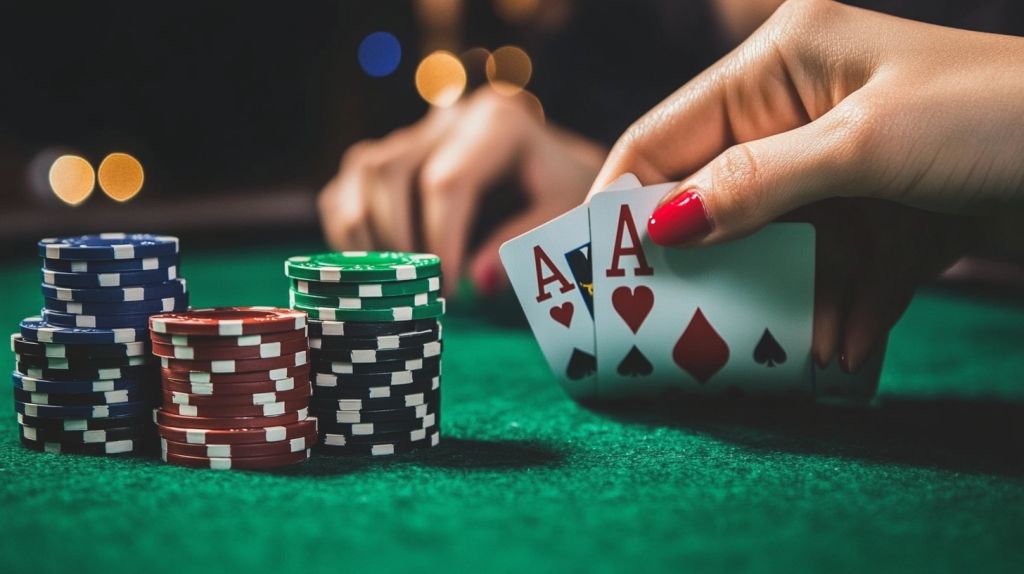
Variance explains short-term swings around expected value. You might win ten bets in a row or lose twenty. That’s variance, not rigging. Over millions of bets, results approach expected value. But in your session, anything can happen. High variance games swing more wildly. You can win or lose big fast. Low variance games stay closer to expected value with smaller swings. Variance is why gambling feels exciting instead of predictable. It creates hope and suspense. But it also tricks people into thinking they have systems that work. A few lucky sessions feel like proof. Then variance swings back and wipes out the gains. Accepting variance as randomness keeps expectations realistic. For more information please visit lucky town plus
Return to player is just the flip side of house edge. If the house edge is 4%, RTP is 96%. This percentage shows how much of all wagered money gets paid back to players. Higher RTP means the game keeps less. Always check RTP before playing slots or video poker. Table game RTP depends on strategy. Blackjack with basic strategy has 99%+ RTP. Blackjack with terrible strategy might drop to 95% or lower. Your decisions affect RTP in skill games. In pure luck games like slots, RTP is fixed by the software. You cannot change it. But you can pick games with better RTP and keep more money longer.
Using odds knowledge practically means picking better games and bets. Avoid sucker bets with huge house edge like insurance in blackjack or any bet in keno. Stick to bets with house edge under 2% when possible. European roulette beats American. Baccarat banker bet beats player slightly. Blackjack with basic strategy beats slots. These choices do not guarantee wins, but they slow down the bleeding. Over time, playing smarter games adds up to hundreds or thousands of dollars kept instead of lost. Understanding odds does not help you win. It helps you lose less. That might sound depressing, but it’s honest. Casinos exist because of house edge. Accept it, minimize it, and enjoy the entertainment it buys you.